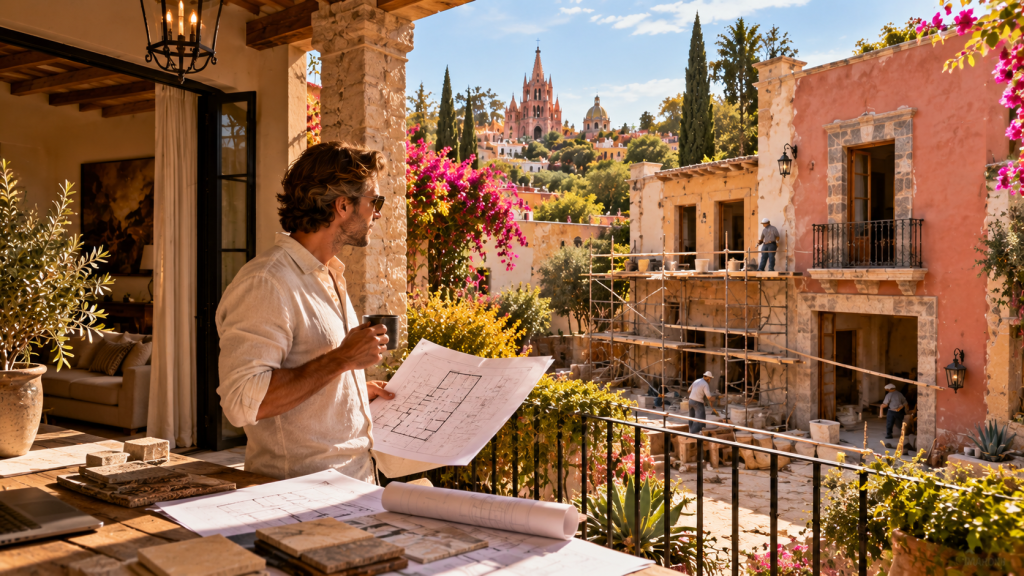
Renovating a home in San Miguel de Allende can be an opportunity to create something truly special. From historic homes near Centro to properties in neighborhoods such as Guadiana, Atascadero, Los Frailes, Balcones, or country developments outside town, every house comes with its own architecture, history, existing conditions, and possibilities.
But home remodeling in San Miguel de Allende can also be very different from renovating a newer property in the United States or Canada. Before selecting tile or imagining a new kitchen, homeowners should understand the building itself, the regulations that may apply, the realistic project scope, and how the renovation will be managed.
Here are seven things worth knowing before you begin.
1. Understand the House Before Designing the Remodel
It’s tempting to begin a renovation with inspiration photos and finish selections, but the existing house should come first. Older properties can contain previous renovations, aging electrical or plumbing systems, moisture issues, structural conditions, or construction methods that aren’t immediately visible when you first walk through the home.
A good renovation begins by understanding what’s already there. Evaluating the structure and existing systems early allows the design team to distinguish between elements worth preserving, components that need improvement, and areas where changing the layout could create significantly better functionality.
2. Historic Properties May Require Additional Considerations
San Miguel isn’t an ordinary construction market. The Protective Town of San Miguel and the Sanctuary of Jesús Nazareno de Atotonilco have been on the UNESCO World Heritage List since 2008, recognized in part for the city’s historic urban fabric and architecture. UNESCO World Heritage Centre
That doesn’t mean every home in San Miguel is a protected historic property. However, renovations within historically significant areas can be subject to planning and conservation requirements, particularly when changes affect façades, architectural character, or other protected elements. UNESCO documentation specifically notes that planning and renovation actions within the historic center should be consistent with its conservation and management requirements. UNESCO World Heritage Centre
Before making major changes, determine which regulations and approvals apply to your specific property.
3. Preserve Character Without Being Afraid to Improve the Home
One of the reasons people fall in love with San Miguel is its architecture. Stone walls, courtyards, wood beams, handcrafted doors, ironwork, fireplaces, arches, colorful tile, textured walls, and traditional materials can give a home a personality that’s difficult to recreate from scratch.
But preserving character doesn’t mean freezing a house in time. Thoughtful home remodeling in San Miguel de Allende can retain the details that make a property distinctive while introducing better kitchens, bathrooms, storage, lighting, mechanical systems, and indoor-outdoor connections. The goal should be for the new work to feel like it belongs to the house rather than competing with it.
4. Establish the Scope Before Establishing the Budget
There’s a significant difference between updating finishes and fundamentally transforming a home. Replacing cabinetry, countertops, lighting, and flooring is one level of renovation; relocating kitchens, rebuilding bathrooms, modifying walls, upgrading systems, restoring architectural elements, or adding square footage is another.
Before asking “How much will the renovation cost?”, define what you’re actually trying to accomplish. A clear scope makes it easier to establish a realistic budget and identify which improvements deserve more investment. It also reduces the likelihood of discovering halfway through construction that the project you envisioned is much larger than the project originally priced.
👉 You May Also Find This Helpful: How Much Does It Cost to Build a House in San Miguel de Allende?
5. Outdoor Spaces Should Be Part of the Renovation
In San Miguel, some of the best rooms aren’t technically rooms at all. Courtyards, terraces, gardens, rooftops, covered patios, fireplaces, pools, and outdoor dining areas can become central to how the property is experienced.
Instead of remodeling the interior first and thinking about the exterior later, consider the relationship between them from the beginning. A kitchen might open toward a courtyard, a primary bedroom could connect to a private terrace, or previously underused exterior space could become an important entertaining area. Planning these connections together can create a home that feels larger and more cohesive without simply adding interior square footage.
6. Local Materials and Craftsmanship Can Become Part of the Design
Renovating in Mexico gives homeowners access to materials and craftsmanship that can give the project a genuine sense of place. Stone, woodwork, metalwork, tile, plaster, custom cabinetry, and handcrafted architectural details can become defining elements of the home.
The important word is intentional. Using traditional materials everywhere doesn’t automatically create great Mexican design, just as importing every finish from the United States doesn’t automatically create a luxury home. The strongest renovations often combine local character with contemporary functionality, using craftsmanship where it creates meaningful architectural impact and simpler solutions where they’re more appropriate.
7. Communication Matters Even More If You Live Abroad
Many homeowners considering renovating a home in San Miguel de Allende won’t be living in Mexico throughout the entire project. If you’re managing the renovation from the United States, Canada, or elsewhere, the construction process needs to work even when you aren’t physically on site.
Plans, budgets, material approvals, photographs, progress updates, schedules, and upcoming decisions should be communicated clearly. You should know what’s happening now and what decisions will be required next. Good project management isn’t simply sending occasional construction photos—it creates enough visibility that the homeowner can make informed decisions without having to personally supervise the job every week.
This topic deserves a guide of its own, so we’ll explore how to manage a home construction or renovation project in Mexico while living abroad separately.
Should You Remodel or Start Over?
Sometimes an existing San Miguel home has extraordinary architecture, mature landscaping, a great location, and details worth preserving. In that situation, renovation can allow you to improve how the property functions while maintaining much of what made you love it in the first place.
Other properties may require such extensive structural, systems, and layout changes that a larger transformation should be considered. There isn’t a universal answer. Understanding the existing house before committing to the project helps determine whether a focused remodel, whole-home renovation, addition, or different approach makes the most sense.
Renovating With Texas Signature Design & Build
At Texas Signature Design & Build, we believe a successful renovation begins before demolition. Understanding the property, establishing priorities, developing the design, defining the construction scope, and discussing budget early creates a much stronger foundation for the project.
For homeowners considering renovations in San Miguel de Allende, Atotonilco, Dolores Hidalgo, Querétaro, and surrounding communities, our approach is about more than making an older home look new. It’s about identifying what makes the property worth keeping and thoughtfully improving everything around it.
Renovating a home in San Miguel de Allende should ultimately create a house that respects where it is while working better for the way you want to live today.